Short answer: yes, the memorials on the National Mall are genuinely better after dark — and it costs nothing to find out. The monuments stay open 24 hours and stay lit all night, so the Lincoln Memorial, the World War II Memorial, and the reflecting pools take on a glow you simply can't get at noon. Crowds thin, the summer heat breaks, and the marble seems to hold the light. If you'll only see the memorials once on your trip, a warm evening is the version most people remember.
This guide covers why night is the move, which memorials reward the after-dark visit most, a simple route to string them together, and the practical details — Metro, timing, safety, and seasonal quirks like cherry blossom season — so you can plan with confidence. None of it requires a ticket, and most of it asks only for a good pair of shoes.
Why the Memorials Are Better After Dark
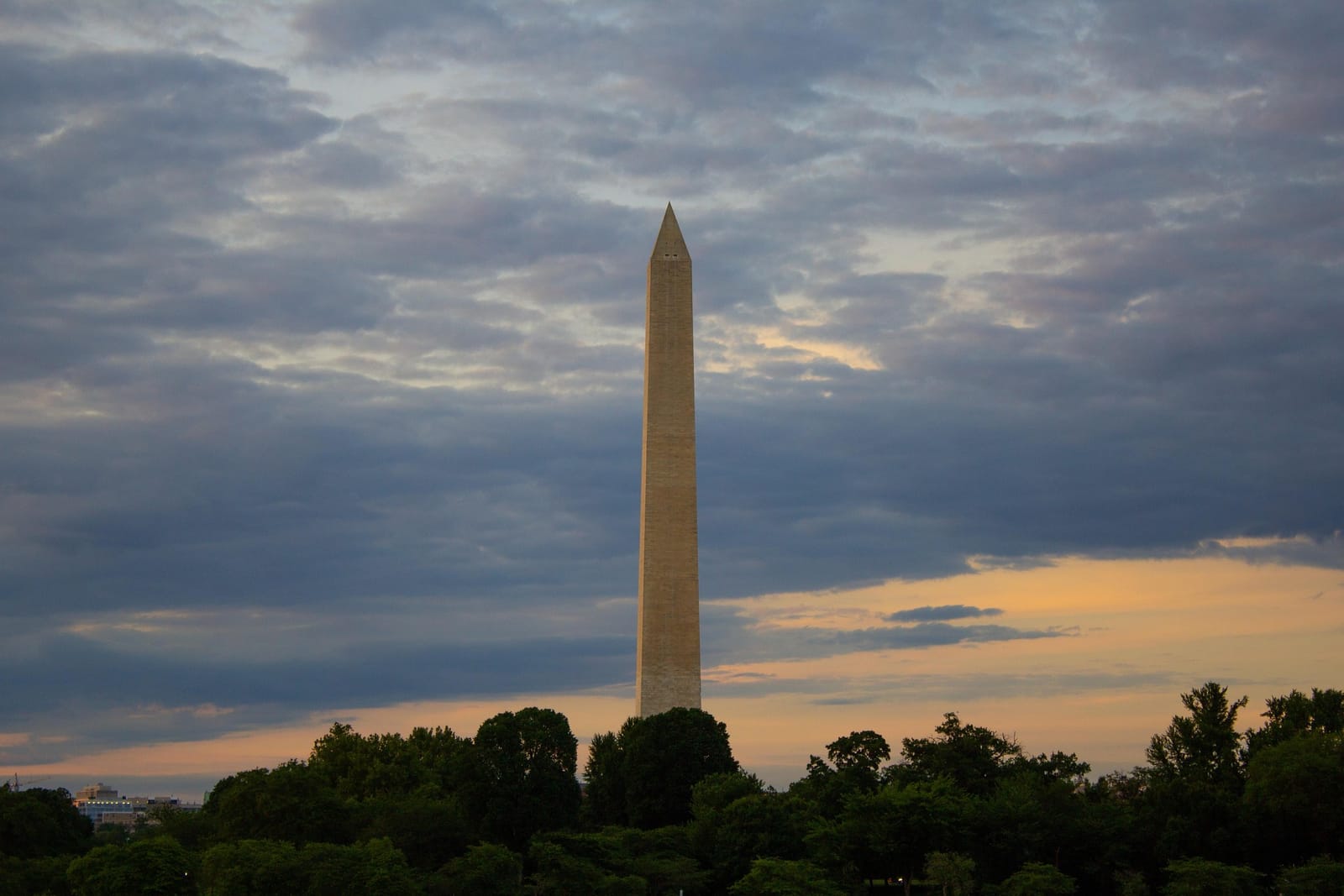
Three things change when the sun goes down. First, temperature: DC summers are humid and the open Mall offers almost no shade, so an evening walk beats a midday slog. Second, crowds: the daytime rush thins out after dinner, and you'll often have whole sections of a memorial nearly to yourself — which matters at places built for reflection. Third, and most important, the light. Each memorial is designed to be seen illuminated, and the effect is theatrical in the best way: Lincoln's statue half in shadow, the Washington Monument floodlit against a black sky, the reflecting pool doubling every light it touches.
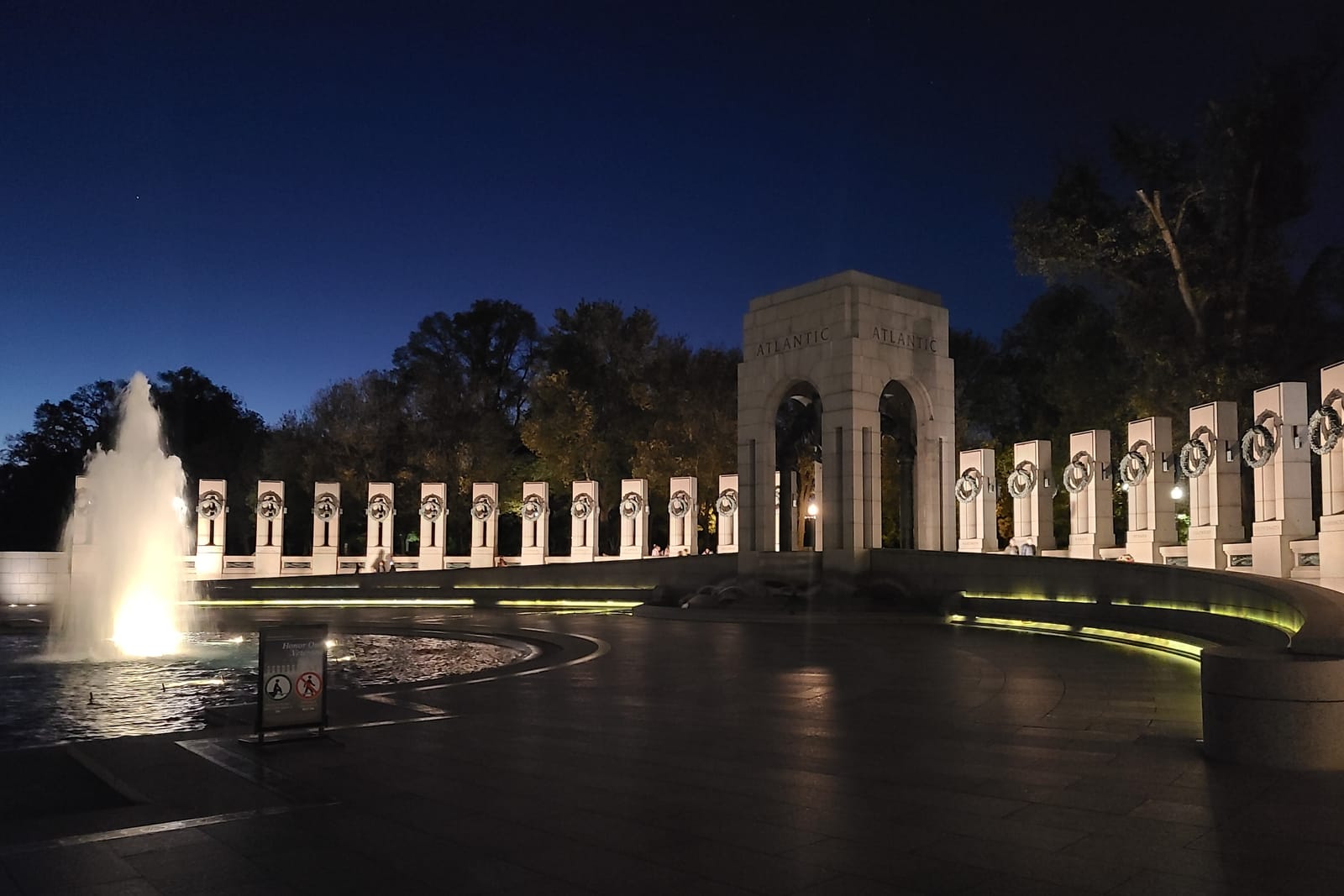
There's an emotional shift, too. The Vietnam Veterans Memorial, the Korean War Veterans Memorial, and the World War II Memorial all read differently in the quiet of evening — names on dark granite, the ghostly figures of the Korean War statues, the hush around the fountains. Sound changes as well; without the daytime churn of voices and footsteps, you notice the water and the wind. Night strips away the bustle and leaves the meaning, and plenty of visitors say the memorials only truly landed for them after dark.
The Memorials Worth Seeing at Night
Start with the Lincoln Memorial. Floodlit and elevated at the west end of the Mall, it's the showpiece: climb the steps, turn around, and you get the classic view straight down the Reflecting Pool to the Washington Monument, with the Capitol dome beyond. Linger a moment at the top — the marble chamber and Lincoln's seated figure feel almost private once the day-trippers have gone. Just below and to the south sits the Korean War Veterans Memorial, whose stainless-steel soldiers look genuinely haunting under spotlights; to the north, the Vietnam Veterans Memorial, where the polished wall and engraved names take on real gravity in low light.
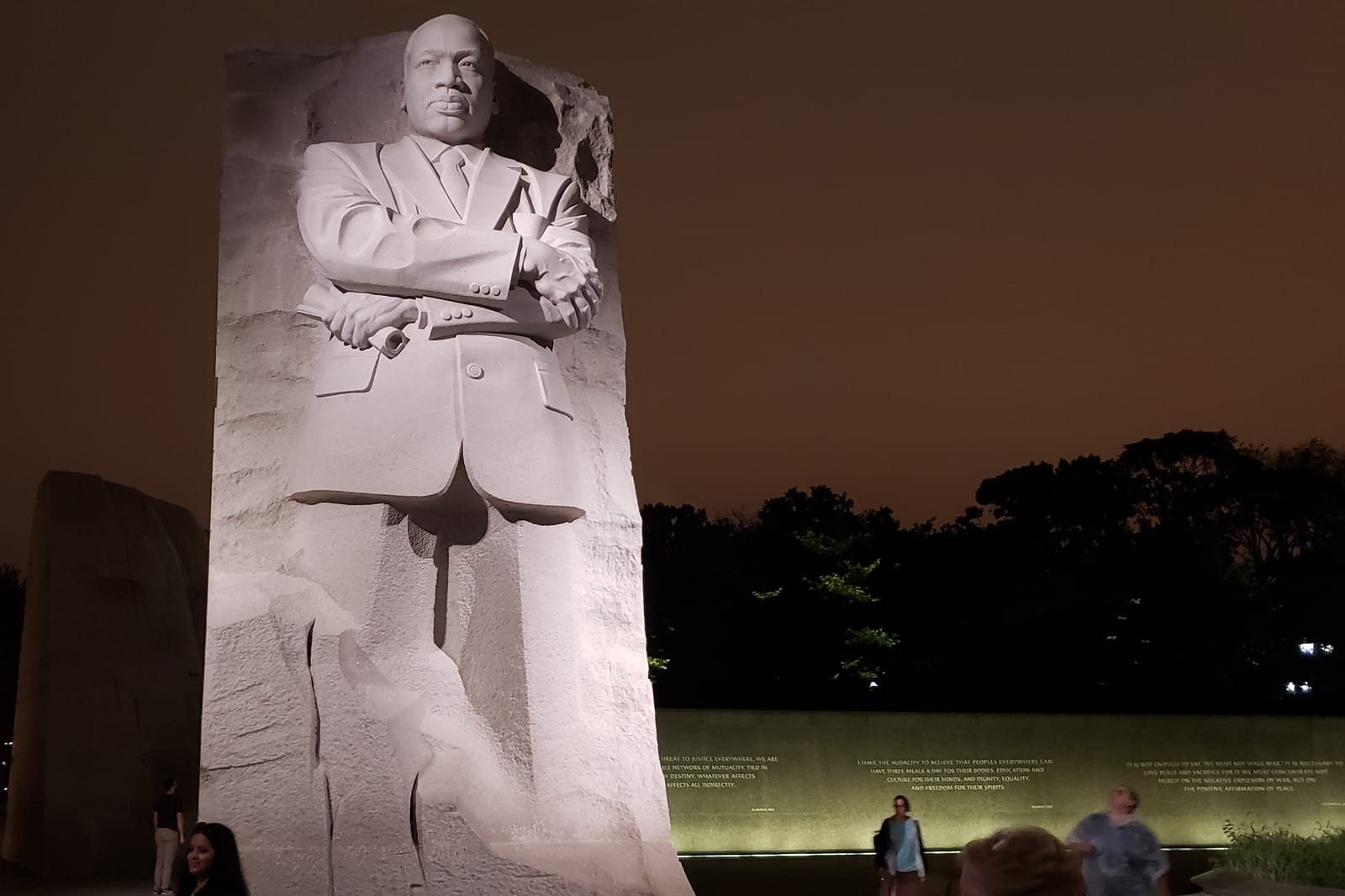
Walk east to the World War II Memorial, where illuminated fountains and the ring of state pillars make a natural gathering spot. The Washington Monument anchors the whole scene — 555 feet of floodlit obelisk visible from almost anywhere on the Mall. A short detour south brings you to the Martin Luther King, Jr. Memorial and the Franklin Delano Roosevelt Memorial along the Tidal Basin, and farther around, the domed Thomas Jefferson Memorial, beautifully lit across the water. You can't do every one in a single evening, but the cluster at the western end makes a perfect first night out.
A Simple After-Dark Route
The National Mall runs roughly two miles from the U.S. Capitol to the Lincoln Memorial, but you don't need to cover all of it. For a relaxed evening, start at the Washington Monument, walk west to the World War II Memorial, continue along the Reflecting Pool to the Lincoln Memorial, then loop back past the Korean and Vietnam memorials. That core circuit takes a couple of hours at an easy pace, with plenty of time to linger. Benches and low walls along the way give you places to rest, and the flat, paved paths make it an easy walk for most ability levels.
If you'd rather not navigate or read every plaque yourself, a guided walk turns the route into a story. The Washington DC Night Memorials Walking Tour with Skyline View runs about two hours, from $59.99, and is built specifically around the after-dark experience — the lighting, the skyline views, and the history that ties the monuments together. A local guide handles the navigation so you can just look up. If you'd rather go in daylight or keep it shorter, the Washington DC Memorials Guided Walking Tour covers the same essential sites in about 90 minutes, from $69.99.
Getting There, Timing, and Safety
The Metro's Smithsonian station is the closest stop to the Mall and leaves you within easy walking distance of the monuments. The Mall is a well-trafficked, well-lit public space in the evenings — you'll usually find other visitors and joggers around, and Park Police patrol the area — so stick to the main paved paths and you'll be fine. Bring a light layer even in summer, since it cools down near the water, and wear comfortable shoes, because the distances add up faster than the map suggests.
On timing, aim to arrive around dusk so you catch the sky shifting from blue to black as the floodlights come up — that transition is when the photos are best. The memorials never close, so there's no rush, but the last Metro trains do have a cutoff; check the return schedule before you head out and plan your walk back accordingly. If you want help sequencing a multi-day itinerary around your night walk, our trip planning page shows how to fit the memorials alongside the museums and Arlington.
Cherry Blossoms and Seasonal Notes
DC's most famous season is cherry blossom time, when the trees around the Tidal Basin typically peak from late March to early April. The blooms ring the FDR, MLK, and Jefferson memorials, and seeing them softly lit in the evening — with far fewer people than the daytime crush — is one of the city's quiet pleasures. That alone is reason to build a night walk into a spring visit.
The rest of the year has its own rewards. Crisp, clear autumn evenings are ideal for skyline views, and even winter nights can be striking, the marble sharp against a cold sky. Summer is the busiest and warmest season — which is the strongest argument of all for swapping a midday visit for an after-dark one.
Pair It With Arlington and the Washington Monument
The memorials at night pair naturally with a daytime visit to Arlington National Cemetery, just across the Potomac in Virginia and reachable on its own stop, Arlington Cemetery on the Metro's Blue Line. The Changing of the Guard at the Tomb of the Unknown Soldier takes place every hour — and every half hour in summer — a solemn, precise ceremony worth timing your visit around.
If you'd rather go up than just look up, the Washington Monument is reached by a timed, ticketed elevator to an observation level with views over the whole city; tickets are limited and go fast, so reserve ahead. Browse everything we run on the tours page, and when you're ready to turn a list of monuments into an evening you'll actually remember, the night memorials walk is the easiest way to start.
Frequently asked questions
Are the DC memorials open at night?+
How long does the DC night memorials walking tour take?+
What's the closest Metro stop to the National Mall memorials?+
When do the cherry blossoms bloom near the memorials?+
Book These Tours
Plan your day in Washington DC
Build a non-overlapping day of monument tours, memorials, and Arlington — then book it all in one checkout.
Open the DC Day Planner →