The Korean War Veterans Memorial sits on the southeast side of the Lincoln Memorial Reflecting Pool, a short walk from the Lincoln Memorial on the National Mall in Washington, DC. Its centerpiece is a column of 19 stainless steel soldiers advancing across an open field, frozen mid-patrol. It's free to visit, open 24 hours a day, lit at night, and you only need 20 to 30 minutes to take it in — though most people linger longer than they planned. Here's what you're actually looking at, how to find it, and how to fold it into a wider walk through DC's memorials.
The soldiers in the field — what you're looking at
The first thing that stops people is the platoon. Nineteen larger-than-life figures, each over seven feet tall, push forward through a triangular field of granite strips and low juniper meant to evoke rough Korean terrain. They wear heavy ponchos that seem to catch the wind, and they carry the gear of a squad on the move. The faces are tense and watchful. Walk slowly around the edge and you can read the strain in every posture — this is a patrol that doesn't know what's over the next ridge.
Look to your right and the statues are mirrored in a polished black granite wall. The reflection doubles the 19 figures into a ghostly 38 — a number chosen on purpose. The Korean War was fought along the 38th parallel, and it lasted roughly 38 months. The soldiers represent all the branches that served: Army, Marines, Navy, and Air Force. The figures are spread across the field so that no matter where you stand, you feel like you've walked into the middle of the column rather than viewed it from outside.
The Mural Wall, the Pool of Remembrance, and 'Freedom Is Not Free'
The granite Mural Wall is more than a mirror. Etched into its surface are thousands of faces drawn from real wartime photographs — pilots, nurses, chaplains, mechanics, and support crews, the people who kept the soldiers in the field supplied and alive. As you move along it, the faces shift between the carved images and your own reflection, which is the point: it quietly pulls every visitor into the picture.
At the far end the patrol reaches the Pool of Remembrance, a circular reflecting pool ringed by trees and benches — the calmest corner of the site and a good place to sit. Nearby, carved in stone, is the memorial's most quoted line: 'Freedom Is Not Free.' A more recent Wall of Remembrance now lists the names of American service members who died in the conflict, giving the site something the original sculpture lacked: a roll of the fallen. Together these elements turn a sculpture garden into a place that asks you to stop and reckon with the cost.
How to find it on the National Mall
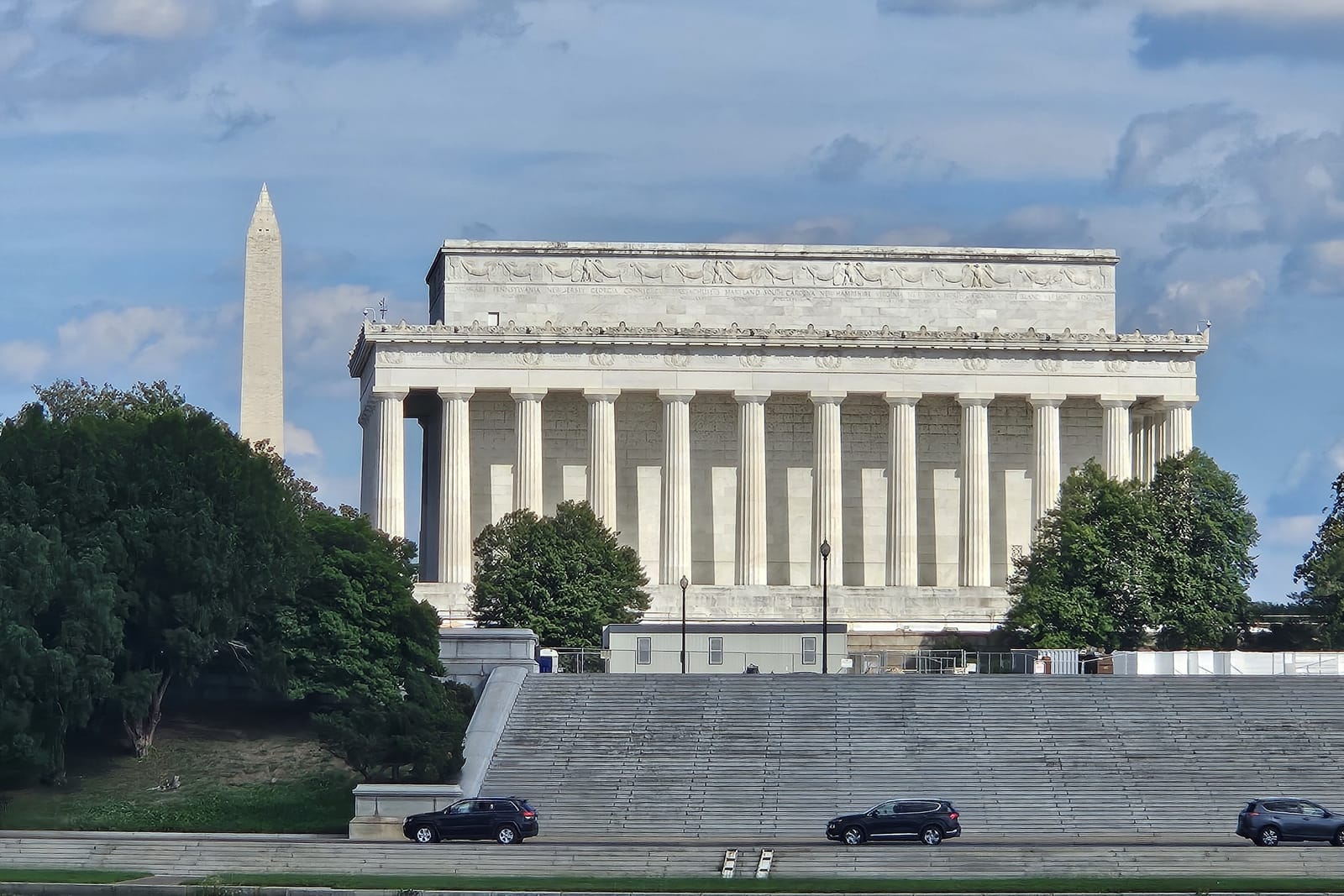
The memorial is at the west end of the National Mall, which runs about two miles from the U.S. Capitol to the Lincoln Memorial. The Korean War Veterans Memorial is tucked just southeast of the Lincoln Memorial, opposite the Vietnam Veterans Memorial, which sits on the northwest side of the Reflecting Pool. If you're coming by Metro, the Smithsonian station is the closest stop to the Mall, though it's still a healthy walk west to this end — budget 15 to 20 minutes on foot, or pair the memorial with the others clustered around the Reflecting Pool so the walking pays off.
Because the memorials sit so close together, this stretch is ideal on foot — and it's easy to miss the small details when you're navigating on your own. A guided walk solves that. Our Washington DC Memorials Guided Walking Tour (from $69.99, about 1.5 hours) connects the Korean War, Lincoln, Vietnam, and World War II memorials with the stories behind them, so the symbolism of those 19 soldiers actually lands instead of slipping past. You can compare it with our other memorial walks and DC tours to find the pace that fits your trip.
See it at night
If you only have time to visit once, consider going after dark. The memorials on the Mall are open 24 hours and lit at night, and the Korean War Veterans Memorial is one of the most dramatic in low light. Soft uplighting catches the ponchos and the soldiers' faces, throwing long shadows across the field so the patrol looks like it's genuinely moving through gloom. The crowds thin out, the temperature drops in summer, and the whole experience turns quiet and cinematic.
Our Washington DC Night Memorials Walking Tour with Skyline View (from $59.99, about 2 hours) is built around exactly this magic hour, pairing the illuminated memorials with skyline views of the city. It's a strong pick if you spent the day in the Smithsonian museums — which are free — and want an evening that feels different from the daytime tourist shuffle.
Pairing it with Arlington and the other war sites
The Korean War Veterans Memorial works best as part of a fuller look at how the country remembers its service members. Just across the Reflecting Pool, the Vietnam Veterans Memorial and the World War II Memorial complete the trio of major war memorials, all within an easy stroll. For the next chapter, cross the Potomac into Virginia to Arlington National Cemetery, which has its own Metro stop (Arlington Cemetery, Blue Line). There the Changing of the Guard at the Tomb of the Unknown Soldier takes place every hour, and every half hour in summer.
If Arlington is on your list, a dedicated Arlington National Cemetery tour covers the grounds, the Tomb of the Unknown Soldier, and the Kennedy gravesite without the long uphill walking, which is welcome on a hot day. Many visitors do the Mall memorials in the morning and save Arlington for the afternoon.
Plan your visit
A few practical notes. There's no admission fee and no ticket needed for the Korean War Veterans Memorial — like the rest of the Mall memorials, it's open around the clock. The terrain near the statues is uneven granite and gravel, so wear comfortable shoes, and bring water in summer since this end of the Mall has little shade. If you want a view from above, the nearby Washington Monument — 555 feet tall — is reached by a timed ticketed elevator; grab Washington Monument tickets in advance, because same-day slots go fast. And if you're visiting in late March or early April, the cherry blossoms typically peak around the Tidal Basin, an easy add-on just south of this cluster of memorials.
However you do it, give yourself a moment at the Pool of Remembrance before you move on. The Korean War is sometimes called the 'Forgotten War,' and the whole design of this memorial is a quiet argument against forgetting. Standing among those 19 soldiers — and watching them become 38 in the granite — is one of the most affecting few minutes you can spend in Washington. For help mapping a full day around it, see our trip planning guide.
Frequently asked questions
Where is the Korean War Memorial in DC?+
What do the 19 soldiers at the Korean War Memorial represent?+
Is the Korean War Memorial open at night?+
How long do you need at the Korean War Memorial?+
Book These Tours
Plan your day in Washington DC
Build a non-overlapping day of monument tours, memorials, and Arlington — then book it all in one checkout.
Open the DC Day Planner →