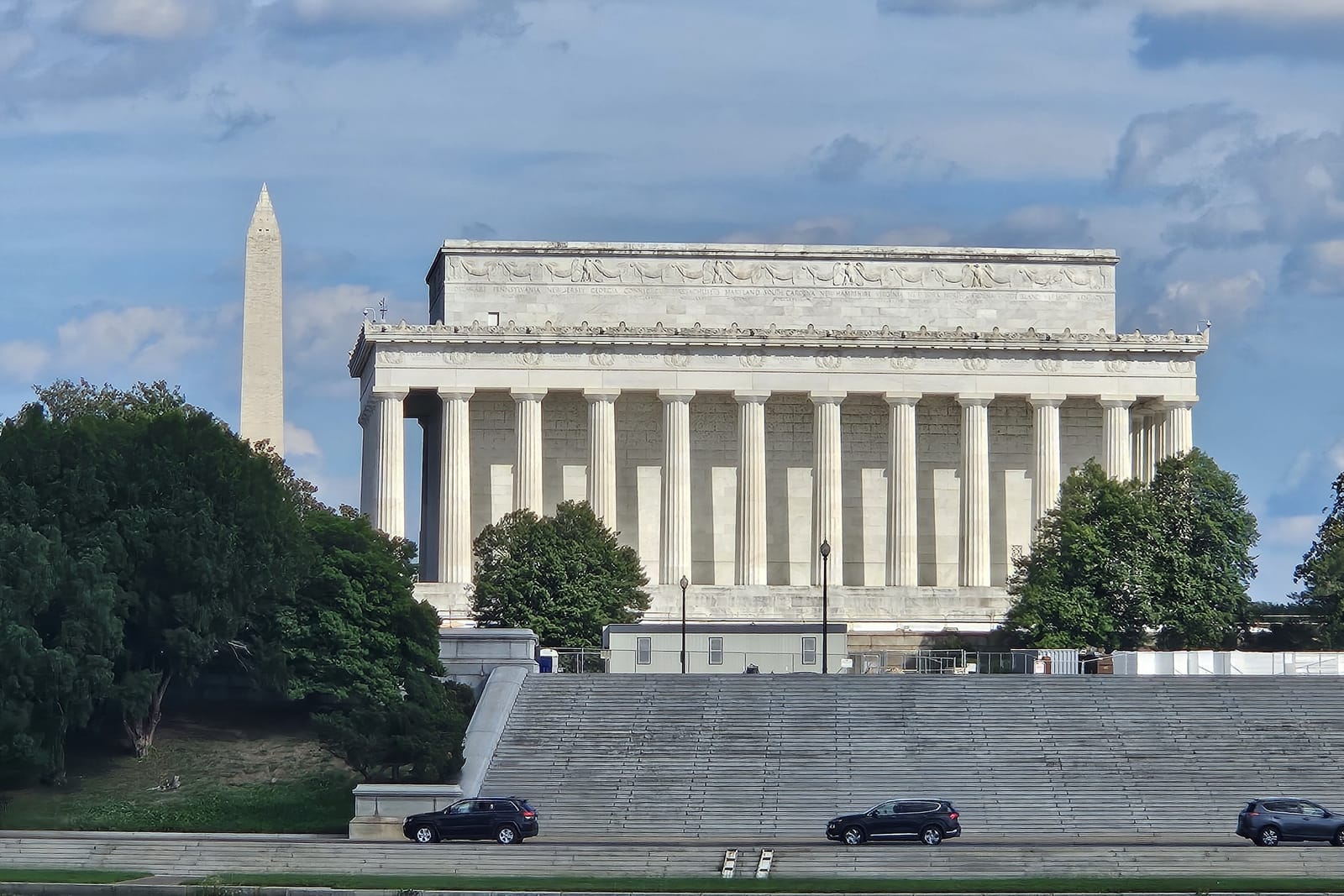
The Lincoln Memorial sits at the west end of the National Mall, free to visit and open 24 hours a day, every day. You climb the marble steps, pass between its 36 columns, and stand before the 19-foot seated statue of Abraham Lincoln gazing out over the Reflecting Pool toward the Washington Monument. Plan on 20 to 40 minutes to take it in properly, more if you want to read the inscriptions and find the spot where Martin Luther King Jr. delivered his "I Have a Dream" speech. It is one of the few major DC sights with no ticket, no line, and no closing time, which makes it easy to fit into any itinerary.
What to See at the Lincoln Memorial
Most visitors are surprised by how much detail rewards a slower look. The centerpiece is Daniel Chester French's colossal statue of a seated Lincoln, carved from white Georgia marble, his expression and hands often described as conveying both strength and weariness. Flanking the chamber are two of his most famous texts carved into the stone: the Gettysburg Address on the south wall and the Second Inaugural Address on the north wall. Take a minute to read them where they were meant to be read, in Lincoln's own words and at monumental scale.
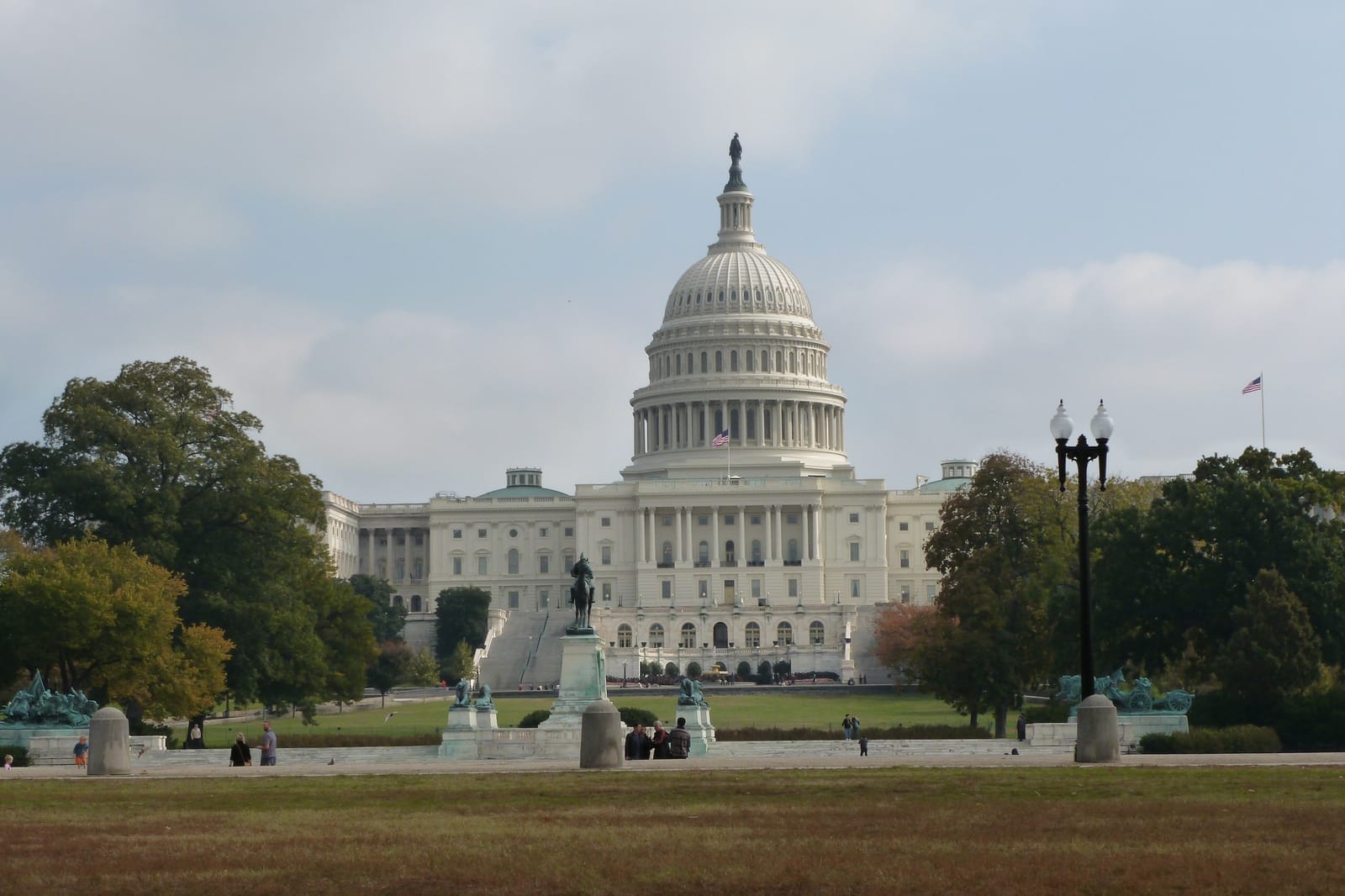
Don't leave without turning around. The view back east down the Reflecting Pool toward the Washington Monument and the Capitol is one of the best photo lines in the city, and it is free at any hour. On the landing partway down the steps, look for the engraved marker noting where Dr. King stood during the 1963 March on Washington. The memorial also sits within a short walk of the Vietnam Veterans Memorial, the Korean War Veterans Memorial, and the World War II Memorial, so the Lincoln is really the anchor of a whole cluster of national monuments.
The Best Time to Visit (Day or Night)
Early morning is the calmest time to have the memorial nearly to yourself, with soft light for photos and far fewer crowds than midday. If you can only come once, though, consider going after dark. The memorials on the Mall are lit at night, and a glowing Lincoln framed by his columns and mirrored in the Reflecting Pool is genuinely unforgettable. Because the memorial never closes, an evening visit is completely doable and often the most atmospheric way to experience it.
Spring is the marquee season: cherry blossoms around the nearby Tidal Basin typically peak from late March to early April, drawing big crowds but also the city's best scenery. Summer brings the largest numbers and the most heat, so an early start or a night outing pays off. Fall offers comfortable weather and thinner crowds, and even winter has its appeal, with crisp air and quiet steps. If a guided evening walk appeals to you, the Washington DC Night Memorials Walking Tour with Skyline View covers the Lincoln and its neighbors after dark over about two hours, from $59.99, with the lit monuments and skyline at their most dramatic.
How to Get There
The Lincoln Memorial sits at the far west end of the Mall, the one stretch the Metro does not run right up to. The closest stations are Smithsonian and Foggy Bottom, each roughly a 15 to 20 minute walk away, so wear comfortable shoes. Smithsonian station puts you in the heart of the museum district; from there you can stroll the full length of the Mall, which runs about two miles from the U.S. Capitol to the Lincoln Memorial. Rideshare and Metrobus routes also serve the area, and the limited paid street parking nearby fills quickly, so transit or walking is usually easier than driving.
If walking the whole Mall on your own feels like a lot to organize, a guided memorials walk does the planning for you. The Washington DC Memorials Guided Walking Tour links the Lincoln, Vietnam, Korean War, and World War II memorials with the stories behind each in about 1.5 hours, from $69.99, so you get context and route in one go without backtracking.
What's Nearby on the National Mall
The Lincoln Memorial is the western anchor of an extraordinary walkable corridor. Just steps away are the Vietnam Veterans Memorial's reflective black granite wall and the haunting statues of the Korean War Veterans Memorial. A short walk east brings you to the World War II Memorial and the Washington Monument, the 555-foot obelisk reached by a timed ticketed elevator; if a trip to the top is on your list, sort out Washington Monument tickets in advance, since same-day passes go fast. South of the Lincoln, around the Tidal Basin, you'll find the Martin Luther King Jr., FDR, and Thomas Jefferson memorials, plus the cherry trees.
Across the Potomac in Virginia lies Arlington National Cemetery, easily reached on the Blue Line at its own Arlington Cemetery Metro stop. The Changing of the Guard at the Tomb of the Unknown Soldier takes place every hour, and every half hour in summer, and is one of the most moving ceremonies in the capital. A dedicated Arlington National Cemetery tour helps you navigate the vast grounds and time your visit to the guard ceremony. And if you'd rather map all of this out before you arrive, the trip planner helps you sequence the memorials, museums, and Arlington into a sensible day.
Practical Tips for Your Visit
A few things make the day smoother. There is no admission and no security screening to enter the Lincoln Memorial itself, so you can come and go freely. Restrooms and a small bookstore sit below the main chamber. The Smithsonian museums lining the Mall are all free, making them an easy, budget-friendly pairing with your memorial walk, especially if the weather turns. Bring water in summer, since the Mall offers little shade, and wear shoes you can cover real distance in; people consistently underestimate how far apart the sights are.
For photos, sunrise and the hour after sunset give you the best light and that Reflecting Pool mirror effect, while midday tends to be crowded and harsh. If accessibility is a concern, an elevator and ramp provide step-free access to the memorial chamber. However you choose to see it, the Lincoln Memorial rewards a little patience, and pairing it with a guided memorials walk, day or night, turns a quick photo stop into the centerpiece of your time in Washington.
Frequently asked questions
Is the Lincoln Memorial free to visit?+
What is the closest Metro station to the Lincoln Memorial?+
Can you visit the Lincoln Memorial at night?+
How long should you spend at the Lincoln Memorial?+
Book These Tours
Plan your day in Washington DC
Build a non-overlapping day of monument tours, memorials, and Arlington — then book it all in one checkout.
Open the DC Day Planner →