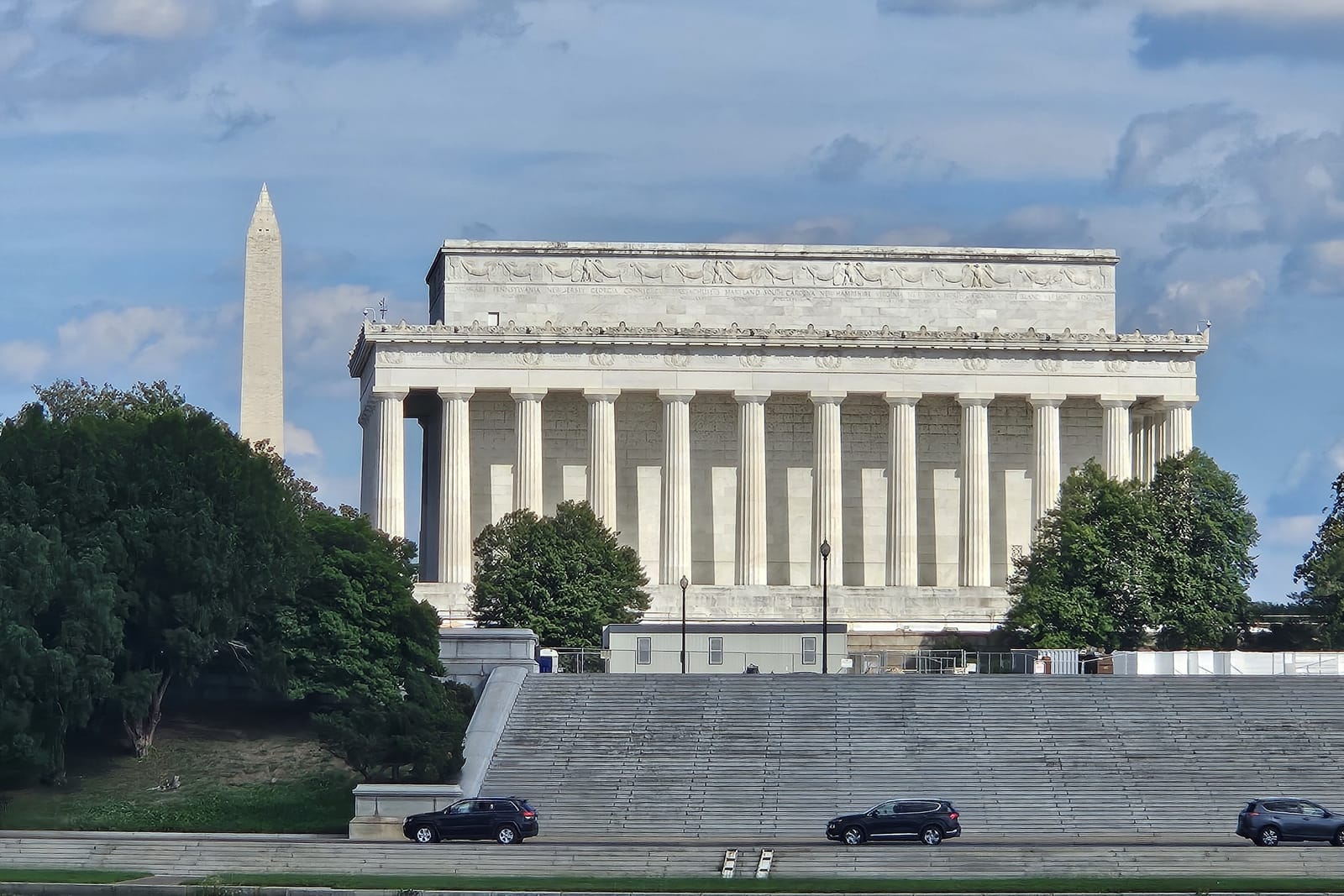
The Vietnam Veterans Memorial sits at the west end of the National Mall, just northeast of the Lincoln Memorial, and visiting it is both free and refreshingly simple. You walk down to a long wall of polished black granite, use the directory at either end to look up a name, and follow the panels in the order the names appear. The memorial is open 24 hours a day and lit after dark, so there is no wrong time to come. Of all the memorials in Washington, the Wall has a way of catching visitors off guard — people who arrive expecting a quick photo stop often linger far longer than they planned. Here is how to find it, how to read it, and how to take it in with the respect it asks for.
Where to Find the Wall and How to Get There
The Wall is tucked into Constitution Gardens on the north side of the Mall, a short, flat walk from the Lincoln Memorial. The National Mall runs roughly two miles from the U.S. Capitol to the Lincoln Memorial, so the Vietnam Veterans Memorial sits near its western end, with the Korean War Veterans Memorial facing it from across the reflecting pool. If you are taking Metro, the Smithsonian station is the closest stop to the Mall, though you will have a pleasant 15-to-20-minute walk west to reach the Wall; Foggy Bottom works as an approach from the north. Because the memorials here cluster so close together, many visitors prefer to cover them on foot with someone who knows the ground. DC Tours runs a Washington DC Memorials Guided Walking Tour from $69.99 that links the Mall's most significant sites in about 1.5 hours, so you can keep your eyes on the memorials instead of a map.
How the Wall Is Organized
The memorial was designed by Maya Lin, then an undergraduate at Yale, and dedicated in 1982. It is built from two long walls of mirror-polished black granite that meet at a wide angle near the center: one arm points toward the Washington Monument, the other toward the Lincoln Memorial, quietly tying the site into the larger landscape around it. More than 58,000 service members are inscribed here, and the single most important thing to understand before you arrive is that the names are listed in chronological order by date of casualty, not alphabetically. The list opens at the center panel, runs outward to the east end, then resumes at the far west end and works back to the center, so the war's timeline closes where it began. Each name carries a small symbol: a diamond marks those confirmed dead, a cross marks those who were missing. The polished stone reflects the Mall and the faces of the people standing before it, which is a deliberate and powerful part of Lin's design.
How to Find a Specific Name
If you have come to find one person, start at the directories mounted at either end of the Wall. They list every name alphabetically and give you a reference: a panel number (such as 14E) and a line number. The panels themselves are numbered, so once you have that reference you can walk straight to the right section instead of scanning thousands of names. National Park Service rangers and volunteers are usually nearby and will help you locate a name or make a pencil rubbing on paper to carry home, a tradition many families treasure. You will often see flowers, photographs, dog tags, and handwritten letters left at the base of the panels; leaving a small token is a long-standing part of how people honor the names here. Take your time. For a great many visitors this is the emotional heart of the trip, and there is no need to rush it.
The Three Servicemen and the Vietnam Women's Memorial
The Wall is the centerpiece, but two sculptures complete the site, and each earns a few minutes. The Three Servicemen statue, added in 1984, stands a short distance away and depicts three young soldiers looking toward the names, positioned so they seem to be gazing at their fallen comrades. The Vietnam Women's Memorial, dedicated in 1993, honors the women — most of them nurses — who served during the war. Together these three elements give the memorial its full meaning, so it is worth walking the whole loop rather than stopping at the Wall alone.
Visiting the Wall at Night
The memorials on the Mall stay open 24 hours and are illuminated after dark, and many people find the Vietnam Veterans Memorial especially moving at night, when the crowds thin and the lit panels glow against the surrounding city. If you would rather not walk the dim paths alone, DC Tours offers a Washington DC Night Memorials Walking Tour with Skyline View from $59.99 that runs about two hours and pairs the Wall with the Lincoln and Korean War memorials plus views of the floodlit skyline. It is one of the quietest and most reflective ways to experience the Mall.
See It on a Guided Memorials Walk
The Vietnam Veterans Memorial is rarely visited on its own — it sits within easy walking distance of the Lincoln Memorial, the Korean War Veterans Memorial, the World War II Memorial, and the Martin Luther King Jr. and FDR memorials around the Tidal Basin. Seeing them together is the best way to understand the Mall, and it covers a lot of ground; the daytime memorials walking tour is built around exactly this route. To extend a day of remembrance, many visitors pair the Mall with Arlington National Cemetery, across the Potomac in Virginia, where the Changing of the Guard at the Tomb of the Unknown Soldier takes place every hour, and every half hour in summer. A dedicated Arlington National Cemetery tour covers those grounds without the long uphill walks.
Tips for a Meaningful Visit
A few practical notes make the visit smoother. The memorial is free and needs no tickets, so you can come whenever it fits your schedule. Spring is the busiest season — cherry blossoms typically peak from late March to early April around the nearby Tidal Basin — so expect crowds then and far quieter mornings in late fall and winter. Wear comfortable shoes; the Mall is flat, but the distances between sites add up fast. Bring a pencil and paper if you plan to make a rubbing, and keep your voice low, since visitors and veterans come here to reflect and the mood is intentionally hushed. Photography is welcome, and the reflective granite makes for striking images, but be mindful of anyone who may be grieving as you frame a shot. If you are building a full DC itinerary, the nearby Washington Monument — at 555 feet the tallest structure on the city skyline, reached by a timed ticketed elevator — makes a natural next stop, and you can sketch out the rest of your day on the DC Tours plan your visit page.
Frequently asked questions
How do you find a name on the Vietnam Veterans Memorial?+
Is the Vietnam Veterans Memorial free to visit?+
Can you visit the Vietnam Veterans Memorial at night?+
How long do you need to visit the Vietnam Veterans Memorial?+
Book These Tours
Plan your day in Washington DC
Build a non-overlapping day of monument tours, memorials, and Arlington — then book it all in one checkout.
Open the DC Day Planner →